
How Screeners and RTT Charts Are Changing the Way We Trade Crypto
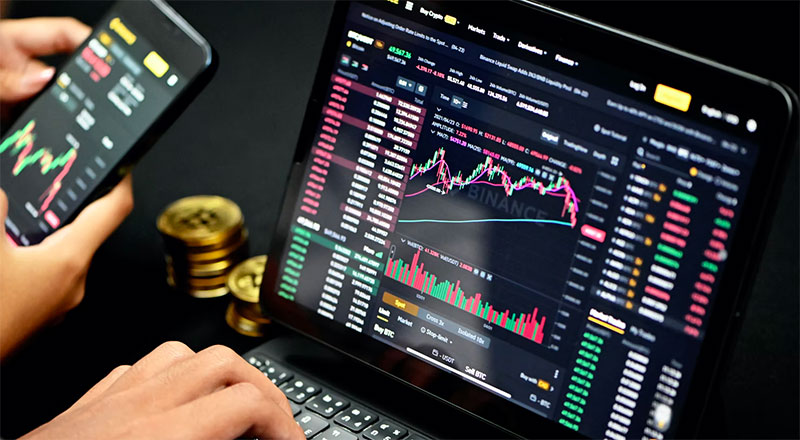
Unlike traditional financial markets, crypto trading never sleeps. It runs 24/7, spans multiple exchanges, and covers thousands of assets. This creates constant opportunities, but also constant risks. Prices can skyrocket or crash within minutes, leaving unprepared traders scrambling.
To thrive in this environment, traders need structured systems and advanced tools that go beyond basic candlesticks. Among the most practical solutions are the crypto screener and the RTT chart — a duo that helps filter assets quickly and then analyze market activity in detail.
Why Screeners Save Time and Reveal Hidden Gems
Monitoring every token manually is impossible. There are simply too many assets, each behaving differently. A crypto screener solves this by scanning the market automatically and flagging assets that meet pre-set conditions.
Traders can configure filters such as:
- price movement over the last 24 hours;
- trading volume compared to recent averages;
- liquidity levels across exchanges;
- volatility indicators that highlight breakout potential.
By reducing the universe of coins to a manageable shortlist, screeners allow traders to focus on the assets with the highest probability of meaningful moves. Without them, opportunities would slip by unnoticed.
Why Liquidity and Volume Matter
Price action alone doesn’t explain whether a move is sustainable. A coin may show a sudden 10% surge, but without volume or liquidity to support it, the trend often fizzles out. Experienced traders know that liquidity tells the real story.
By analyzing where the largest orders are executed and how volumes concentrate at specific levels, traders can distinguish hype-driven pumps from genuine market momentum. This validation step is critical before committing to any position.
RTT Charts: A Deeper Look Into Market Dynamics
After narrowing the field, traders need to understand how the market behaves in real time. This is where the RTT chart comes into play. RTT charts track live transactions and liquidity movements, offering insights far beyond what static price charts can provide.
They reveal:
- when large buy or sell orders hit the market;
- how liquidity clusters around key support and resistance;
- whether momentum is accelerating or losing steam.
This makes RTT charts particularly valuable for day traders and scalpers, who rely on precise timing to capture profits from short-term swings.
Combining Screeners and RTT Charts into a Workflow
The real power emerges when these tools are used together in a structured process:
- Begin with a screener to identify coins with unusual price or volume activity.
- Validate the move by checking liquidity depth and overall market participation.
- Analyze the shortlisted assets on RTT charts to fine-tune entries and exits.
- Execute trades with clearly defined risk management, including stop-loss orders and position sizing.
This workflow ensures decisions are supported by multiple layers of evidence rather than by guesswork or emotional reactions.
Risk Management as the Core of Profitability
Even with advanced analytics, no system is foolproof. Crypto remains volatile and unpredictable. That’s why risk management is the cornerstone of sustainable trading. Professionals stick to golden rules like:
- never risking more than 1–2% of total capital per trade;
- using stop-loss orders to protect against sudden reversals;
- avoiding excessive leverage that magnifies losses.
By combining discipline with strong tools, traders can withstand the randomness of the market while steadily building profitability.
The Future of Crypto Analytics
Looking ahead, screeners and RTT charts will only grow more advanced. Expect integration with artificial intelligence, machine learning algorithms, and even sentiment analysis from social platforms. These innovations will give traders predictive insights rather than just reactive ones.
Yet no matter how advanced technology becomes, one principle stays the same: tools assist, but the trader makes the final decision. Success depends on interpreting the data wisely, staying disciplined, and applying strategies consistently.
